
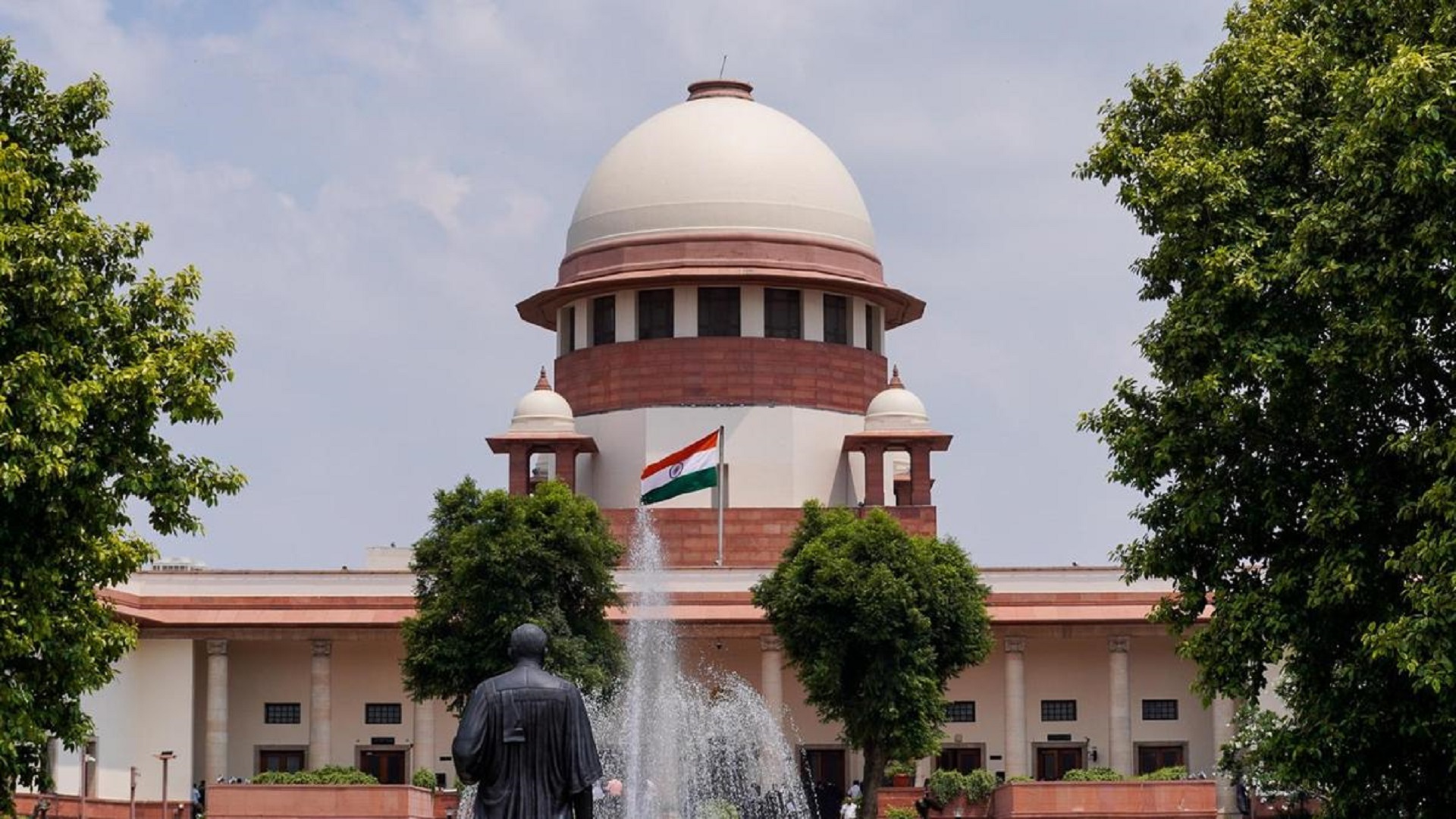
♦ Supreme Court on 24 March 2026 said no person professing a religion other than Hinduism, Sikhism or Buddhism shall be a member of Scheduled Caste. It held that a person from the Scheduled Caste community lost the status after converting to a religion other than Buddhism and Sikhism and could not invoke Scheduled Castes and Scheduled Tribes (Prevention of Atrocities) Act.
♦ A bench of Justices Prashant Kumar Mishra and Manmohan said the bar under Clause 3 of the Constitution (Scheduled Castes) Order, 1950 was "categorical and absolute". It said conversion to any religion not specified in Clause 3 resulted in immediate and complete loss of Scheduled Caste status regardless of birth.
♦ The bench noted that Clause 3, which was originally enacted in 1950, restricted Scheduled Caste status to persons professing the Hindu religion only.
♦ It was amended in 1956 to include the Sikh religion and extended to the Buddhist religion in 1990.
♦ The court upheld the order of Andhra Pradesh HC, which had quashed a case under SC/ST(Prevention of Atrocities) Act on the gro-unds that the complainant had embraced Christianity and could not invoke the law. With respect to Scheduled Tribes, the bench clarified that unlike the Constitution (Scheduled Castes) Order, 1950, the Constitution (Scheduled Tribes) Order, 1950 did not prescribe religion-based exclusion.